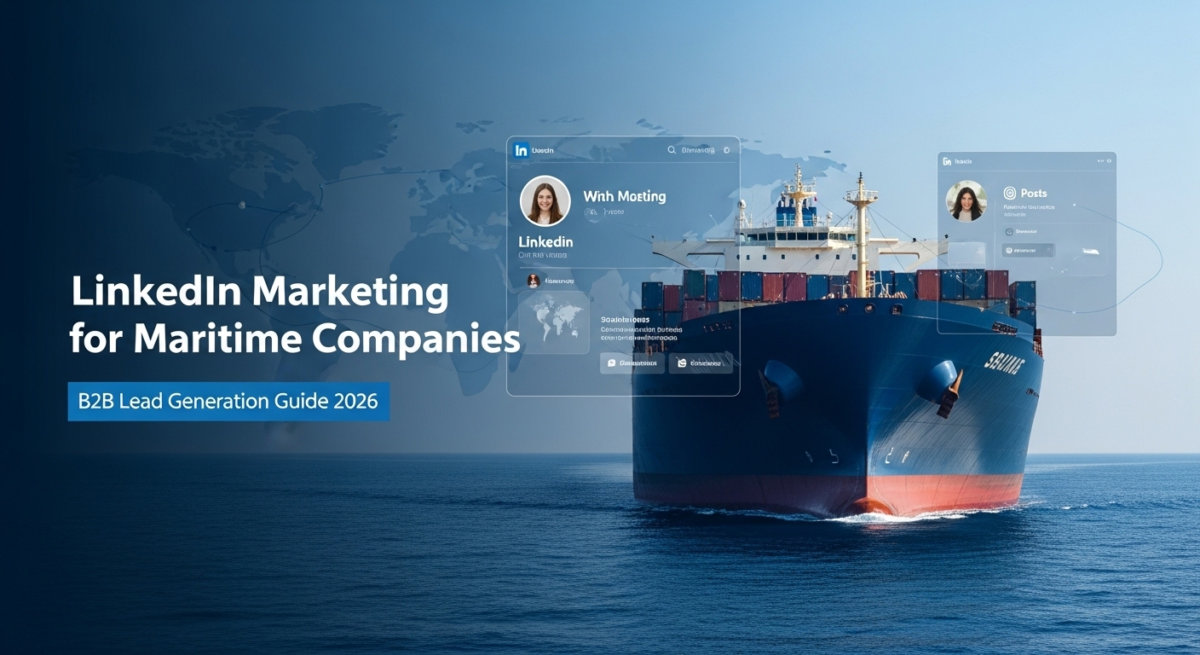
The maritime industry has long relied on traditional networking, trade shows, brokers, and word-of-mouth referrals. But in 2026, the landscape has shifted.
Decision-makers like shipowners, charterers, and logistics managers are now actively using LinkedIn to research partners, evaluate credibility, and initiate business conversations.
If your maritime company isn’t leveraging LinkedIn, you’re missing direct access to high-value global clients.
LinkedIn is no longer just a social platform; it’s a B2B revenue engine.
Why LinkedIn is Crucial for Maritime B2B Marketing
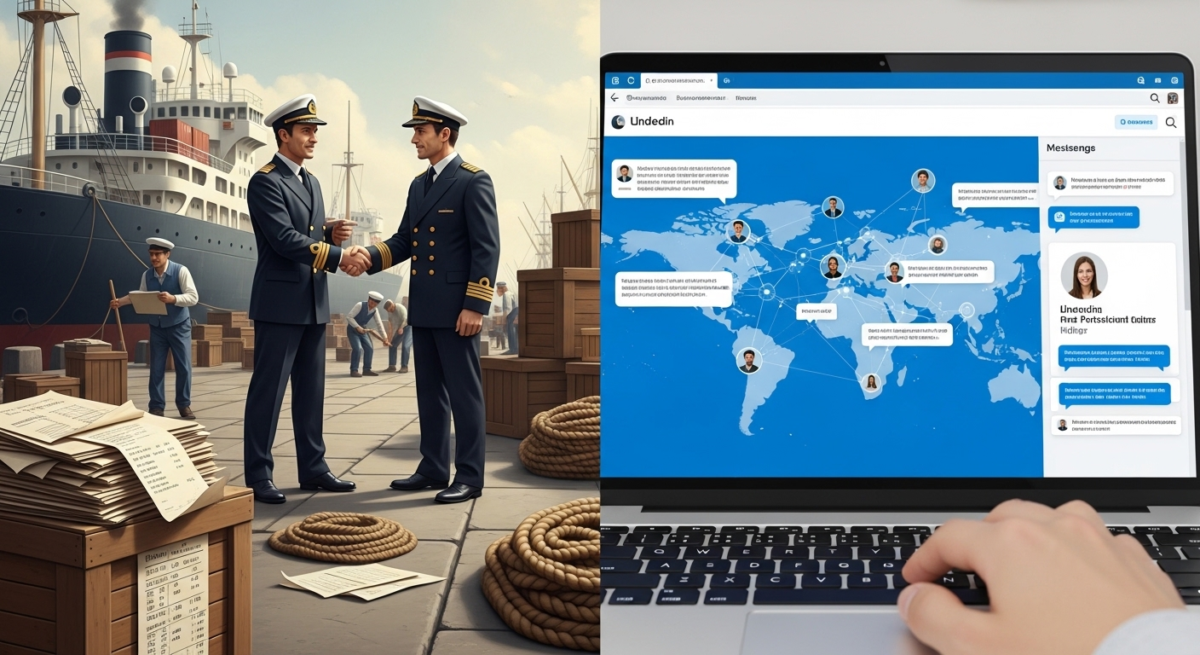
Unlike other platforms, LinkedIn is built specifically for professionals. That means your ideal clients are already there.
Key advantages include:
- Direct access to decision-makers
- Ability to build trust before pitching
- Global reach without intermediaries
- Long-term relationship building
In a trust-driven industry like maritime, visibility and authority often matter more than price.
Understanding the Maritime Buyer Journey on LinkedIn
How Clients Search for Maritime Services
Today’s buyers use conversational, intent-driven searches like:
- “Best bulk shipping company for Middle East routes”
- “Reliable offshore logistics provider”
- “Freight forwarder with compliance expertise”
This is where AEO (Answer Engine Optimization) plays a critical role; your content must answer these questions clearly and directly.
How Maritime Decisions Are Made
B2B maritime clients don’t make impulsive decisions.
They:
- Research multiple companies
- Evaluate credibility and expertise
- Engage with content before initiating contact
Your goal is to be visible at every stage of this journey.
Defining Your Ideal Maritime Client (ICP)
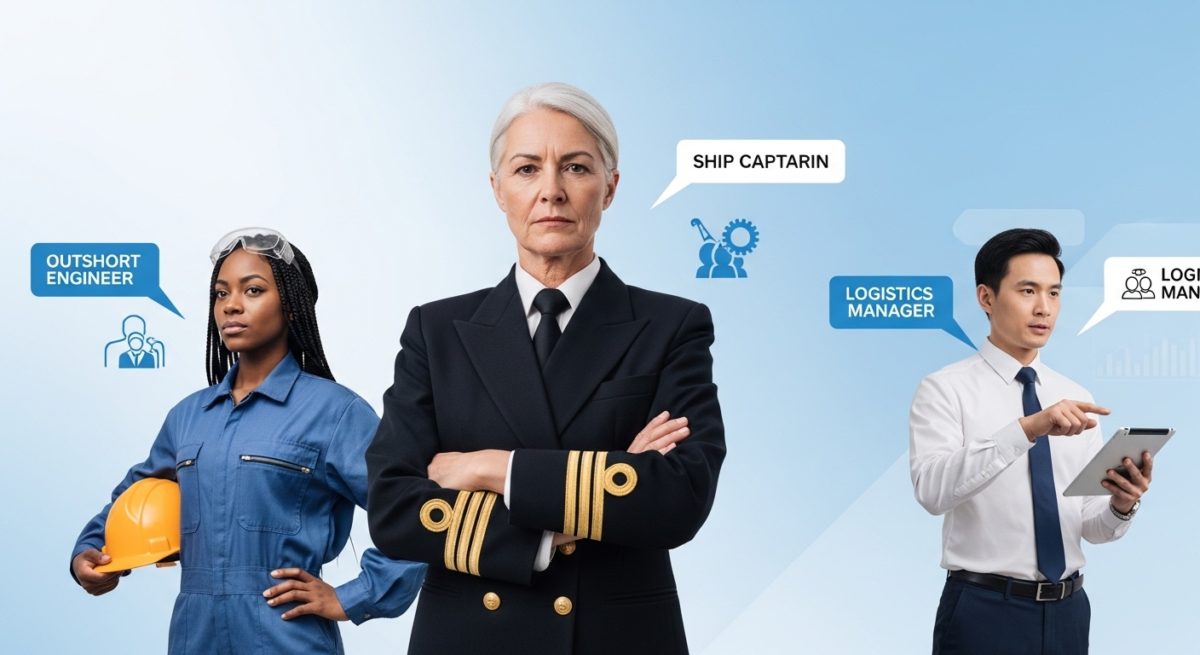
High-Value Target Segments
- Shipowners & fleet managers
- Charterers and brokers
- Freight forwarders
- Oil & gas logistics teams
Key Pain Points to Address
To attract clients, your content must speak directly to their challenges:
- Reducing delays and operational inefficiencies
- Navigating complex regulations
- Optimizing shipping costs
- Ensuring safety and reliability
When your content solves these problems, you naturally attract inbound leads.
Optimizing Your LinkedIn Presence for Maximum Visibility
Company Page Optimization (SEO Layer)
Your LinkedIn page should function like a landing page.
Optimize it by:
- Using keyword-rich descriptions (e.g., maritime logistics, vessel operations)
- Writing a clear, benefit-driven “About” section
- Designing a banner with your value proposition
Founder & Executive Profiles (The Hidden Growth Lever)
In B2B, people trust people, not logos.
That’s why personal branding is critical.
Best practices:
- Position leadership as industry experts
- Share insights, opinions, and experiences
- Use storytelling to humanize your brand
This alone can outperform traditional company marketing.
Content Strategy That Attracts Maritime Clients
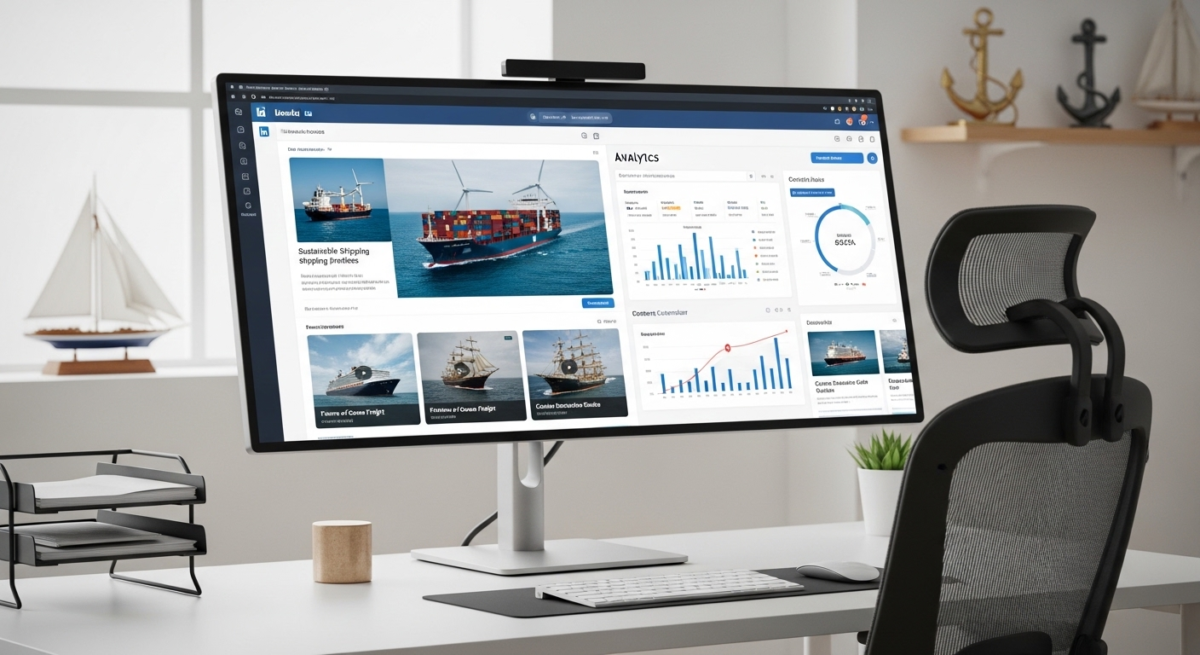
Content is what drives visibility, trust, and inbound leads.
The 4 Core Content Pillars
- Authority Content
Share insights on shipping trends, fuel costs, and global trade - Educational Content
Explain processes like freight forwarding or compliance - Proof Content
Showcase case studies, results, and client wins - Relatable Content
Highlight daily operations, crew life, and behind-the-scenes moments
High-Performing Content Formats
- Carousels → High engagement and reach
- Short videos → Port operations, vessel tours
- Story-driven posts → Build emotional connection
LinkedIn Lead Generation System (Step-by-Step)
Step 1 – Profile Funnel Setup
Your profile should clearly answer:
- Who you help
- What you offer
- How to contact you
Add a simple CTA like:
“Message me for tailored shipping solutions.”
Step 2 – Content That Drives Inbound Leads
Post consistently (3–5 times per week).
Use strong hooks like:
- “Most shipping companies are losing money because of this mistake…”
- “What nobody tells you about freight delays…”
Step 3 – Outbound Strategy (Non-Spammy DM Framework)
Avoid aggressive selling.
Instead:
- Send a personalized connection request
- Start a genuine conversation
- Offer value before pitching
Step 4 – Lead Nurturing
Not every lead converts instantly.
Build trust by:
- Sharing insights
- Engaging with their content
- Staying top-of-mind
This turns cold prospects into warm clients.
LinkedIn Ads for Maritime Companies (Advanced Strategy)
If you want to scale faster, LinkedIn Ads can help.
Best use cases:
- Promoting case studies
- Capturing leads via forms
- Retargeting engaged users
Pro Tip:
Target specific roles like:
- Fleet Managers
- Logistics Directors
- Procurement Heads
Building Authority in the Maritime Industry
Authority is your biggest competitive advantage.
You can build it by:
- Sharing data-backed insights
- Commenting on industry trends
- Posting consistently
Over time, you become the go-to expert in your niche.
Voice Search Optimization (VSO) for Maritime Content

Voice search is growing rapidly, especially in B2B research.
Optimize for Voice by:
- Writing in a conversational tone
- Answering direct questions
- Using natural language
Example:
“How can maritime companies get clients on LinkedIn?”
Answer clearly and concisely, as this increases your chances of ranking in featured snippets.
Common LinkedIn Mistakes Maritime Companies Must Avoid
Avoid these pitfalls:
- Being overly corporate and robotic
- Posting inconsistently
- Selling too early
- Ignoring comments and engagement
LinkedIn rewards authenticity and consistency.
KPIs That Actually Matter
Don’t focus on vanity metrics like likes alone.
Track:
- Qualified leads generated
- DM response rates
- Meetings booked
- Conversion rates
These metrics directly impact revenue.
Future Trends in Maritime LinkedIn Marketing 2026
The future belongs to companies that adapt early.
Key trends:
- AI-powered content creation
- Video-first strategies
- Personal brands outperforming company pages
- Niche specialization dominates broad messaging
Conclusion: Turning LinkedIn into a Revenue Channel
LinkedIn is no longer optional for maritime companies; it’s essential.
With the right strategy, you can:
- Build authority
- Generate consistent leads
- Scale globally
The companies that invest in LinkedIn today will dominate tomorrow’s maritime market.
FAQs
How do maritime companies get clients on LinkedIn?
By combining consistent content, personal branding, and targeted outreach strategies.
Is LinkedIn effective for shipping businesses?
Yes, because most logistics and maritime decision-makers actively use LinkedIn for research and networking.
What type of content works best in the maritime industry?
Industry insights, case studies, operational content, and educational posts perform best.
How often should maritime companies post on LinkedIn?
3–5 times per week for optimal visibility and engagement.