
The shipping and logistics industry is undergoing a massive digital transformation in 2026. Traditional methods like cold calling, referrals, and trade shows are no longer enough to stay competitive. Today’s buyers research extensively online before ever contacting a service provider.
For shipping companies, this shift presents both a challenge and a massive opportunity. Businesses that embrace SEO (Search Engine Optimization), AEO (Answer Engine Optimization), and VSO (Voice Search Optimization) are seeing higher visibility, better lead quality, and faster growth.
This blueprint will walk you through exactly how to position your shipping or logistics company for success in the digital-first era.
Why Digital Marketing is Critical for Shipping Companies in 2026

The Decline of Traditional Marketing
Trade shows and offline networking still matter, but they no longer dominate lead generation. Buyers now compare multiple providers online before making decisions.
Increased Competition
With digital platforms lowering barriers to entry, more logistics companies are competing globally. Without a strong online presence, your business becomes invisible.
Changing Buyer Behavior
Modern B2B buyers expect:
- Instant information
- Transparent pricing
- Real-time tracking
- Fast communication
If your digital presence does not deliver this, your competitors will.
Core Digital Marketing Channels for Shipping Companies
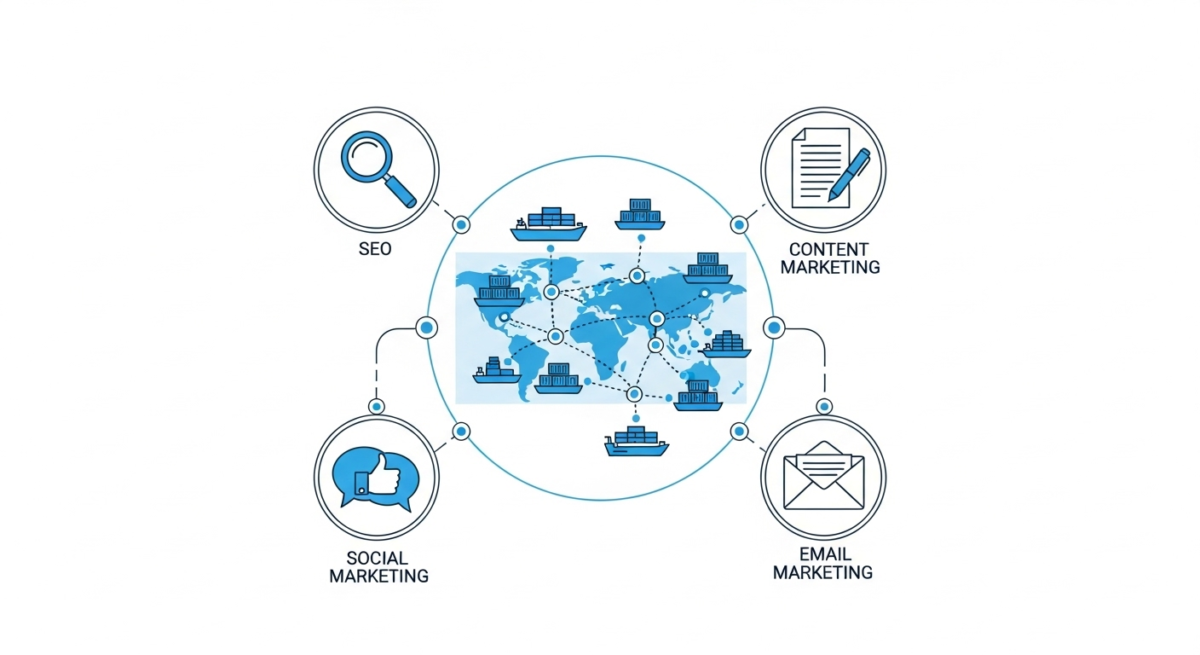
Search Engine Optimization (SEO)
SEO remains the backbone of digital marketing. Ranking on search engines for high-intent keywords like:
- Freight forwarding services in Karachi
- International shipping company
can drive consistent, high-quality leads.
Content Marketing
Publishing blogs, case studies, and guides helps:
- Build trust
- Educate clients
- Improve rankings
Content turns your website into a lead-generation engine.
LinkedIn and B2B Social Media
LinkedIn is a key platform for logistics companies. It allows you to:
- Connect with decision-makers
- Share industry insights
- Generate inbound leads
Email Marketing and Automation
Shipping sales cycles are long. Email marketing helps nurture leads until they are ready to convert.
AI and Automation in Shipping Marketing (2026 Trend)

AI-Powered Personalization
AI tools analyze user behavior and deliver personalized content, increasing conversion rates.
Marketing Automation
Automation tools help:
- Score leads
- Trigger email sequences
- Track customer journeys
Chatbots and Conversational Marketing
Chatbots provide instant responses, improving customer experience and capturing leads around the clock.
SEO Strategy for Shipping Companies (High-Intent Traffic)
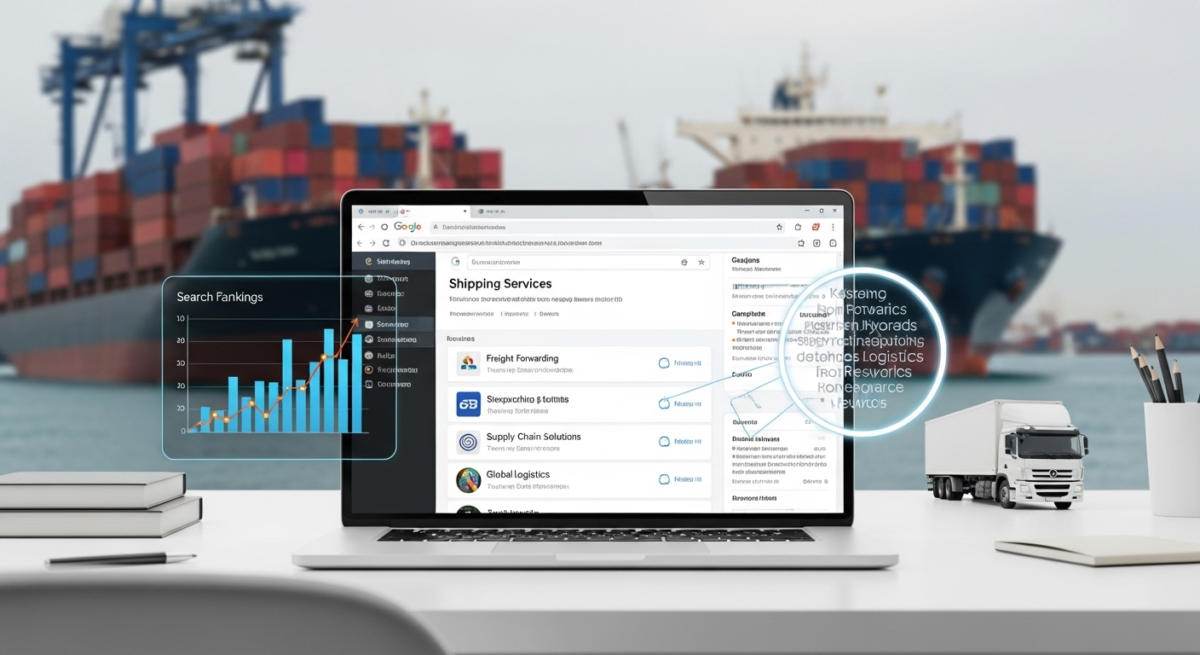
Keyword Strategy
Focus on:
- Long-tail keywords
- Location-based keywords
- Service-specific terms
Example: Air freight services in Pakistan
Technical SEO
Your website must be:
- Fast-loading
- Mobile-friendly
- Secure (HTTPS)
Local SEO
Optimize your Google Business profile and create location-specific landing pages to capture local traffic.
AEO (Answer Engine Optimization) for Logistics Companies
What is AEO and Why It Matters
AEO focuses on optimizing content for:
- Search engine featured snippets
- AI tools such as conversational search platforms
- Voice assistants
Optimize for Questions
Structure content around questions like:
- How much does shipping cost?
- What is freight forwarding?
Use Structured Data
Implement:
- FAQ schema
- Service schema
This helps search engines better understand and feature your content.
Voice Search Optimization (VSO) for Shipping Companies

Rise of Voice Search
Users increasingly search using conversational phrases such as:
Which shipping company is best for international cargo?
How to Optimize
- Use natural language
- Write conversational content
- Include question-based headings
Voice search is especially important for mobile users and professionals on the move.
Website Optimization for Lead Generation
Conversion-Focused Design
Your website should include:
- Clear calls to action
- Contact forms
- Trust signals such as certifications and testimonials
Speed and User Experience
A slow website reduces conversions. Optimize for speed and usability.
Service-Specific Landing Pages
Create dedicated pages for:
- Freight forwarding
- Warehousing
- Customs clearance
This improves both SEO performance and conversion rates.
Data-Driven Marketing and Analytics
Track Key Metrics
Monitor:
- Website traffic
- Conversion rates
- Cost per lead
Make Data-Backed Decisions
Use analytics tools to refine your strategy and maximize return on investment.
Emerging Trends in Shipping Marketing (2026 and Beyond)
- AI-driven logistics marketing
- Sustainability as a competitive advantage
- Digital freight platforms
- Real-time tracking as a marketing differentiator
Companies that adapt early will gain a significant competitive edge.
Conclusion
Digital marketing is no longer optional for shipping and logistics companies. In 2026, success depends on your ability to combine SEO, AEO, and voice search optimization into a unified strategy.
By investing in the right channels, leveraging AI, and focusing on user intent, your company can attract more leads, close more deals, and stay ahead of the competition.
FAQs
What is digital marketing for shipping companies?
It involves using online channels such as SEO, content marketing, and social media to attract and convert customers in the logistics industry.
How can logistics companies generate leads online?
Through SEO, paid advertising, LinkedIn marketing, and high-quality content tailored to customer needs.
What is the best marketing strategy for shipping companies?
A combination of SEO, content marketing, and LinkedIn outreach typically delivers the best results.
Why is SEO important for logistics companies?
SEO drives organic traffic, improves visibility, and generates high-intent leads without continuous advertising costs.
How can AI improve shipping marketing?
AI helps automate processes, personalize campaigns, and analyze customer data to improve decision-making.