
Maritime ecommerce SEO helps ship suppliers rank higher when vessel managers, captains, and procurement teams search for marine parts and provisions online. By optimizing product pages, port-based local SEO, technical ecommerce structure, and buyer-intent keywords, ship suppliers can generate consistent inbound orders instead of relying solely on agents, RFQs, or repeat customers.
What Actually Works for Ship Suppliers
- Maritime buyers search by product + vessel + port + urgency
- SEO must support SKU-heavy catalogs, not just blog traffic
- Port-based local SEO wins last-minute and emergency orders
- E-commerce UX matters as much as rankings
- AI search (Google AI Overviews) is already influencing B2B discovery
The Reality Check Most Ship Suppliers Don’t Like Hearing
Here’s the thing.
Most ship suppliers still depend on:
- Email RFQs
- WhatsApp orders
- Agents and brokers
- “We’ve always done it this way.”
And it works… until it doesn’t.
I’ve seen chandlers with excellent inventory lose deals simply because a procurement officer Googled “marine spare parts supplier Rotterdam” and found a competitor with cleaner ecommerce pages and clearer delivery timelines.
That’s where maritime ecommerce SEO stops being a “marketing idea” and becomes a revenue lever.
What Makes Maritime Ecommerce SEO Different From Normal Ecommerce?
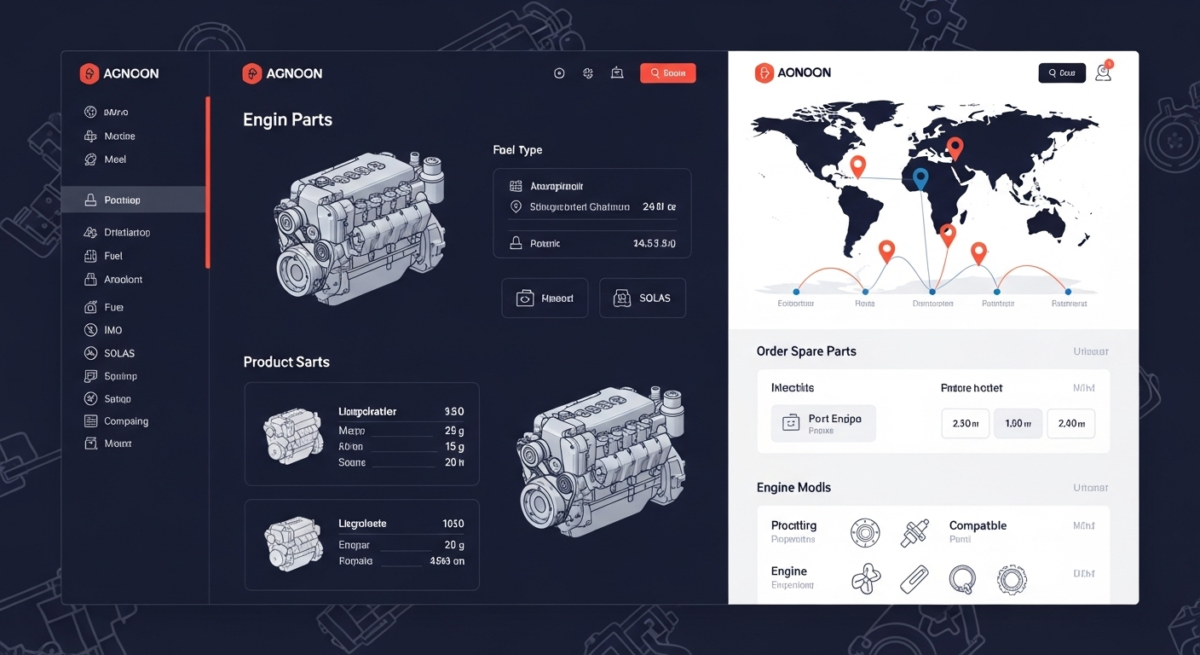
Short answer: maritime buyers don’t shop like consumers, and Google knows it.
Maritime ecommerce SEO sits at the intersection of:
- B2B procurement
- Logistics urgency
- Port geography
- Technical product data
A vessel superintendent searching at 2:00 AM doesn’t browse.
They scan.
They compare.
They act fast.
That changes everything about how SEO must be structured.
Real-world example
A vessel docking in Singapore for 18 hours needs filters, seals, or provisions now. If your product page doesn’t clearly show:
- Compatibility
- Certifications
- Port delivery capability
You won’t get the order even if you rank.
How Do Ship Buyers Actually Search Online?
This is where most SEO agencies get it wrong.
They optimize for broad terms like:
- “marine equipment supplier”
- “ship spare parts”
But real maritime searches look more like:
| Buyer Situation | Actual Search Behavior |
| Emergency repair | IMO approved gasket supplier Rotterdam port. |
| Planned maintenance | MAN B&W engine spare parts ecommerce. |
| Provisions | Ship chandlery Singapore online order |
| Compliance | SOLAS-certified marine safety equipment supplier |
SEO must mirror buyer urgency + compliance language + port context.
Why E-commerce Structure Matters More Than Blog Traffic
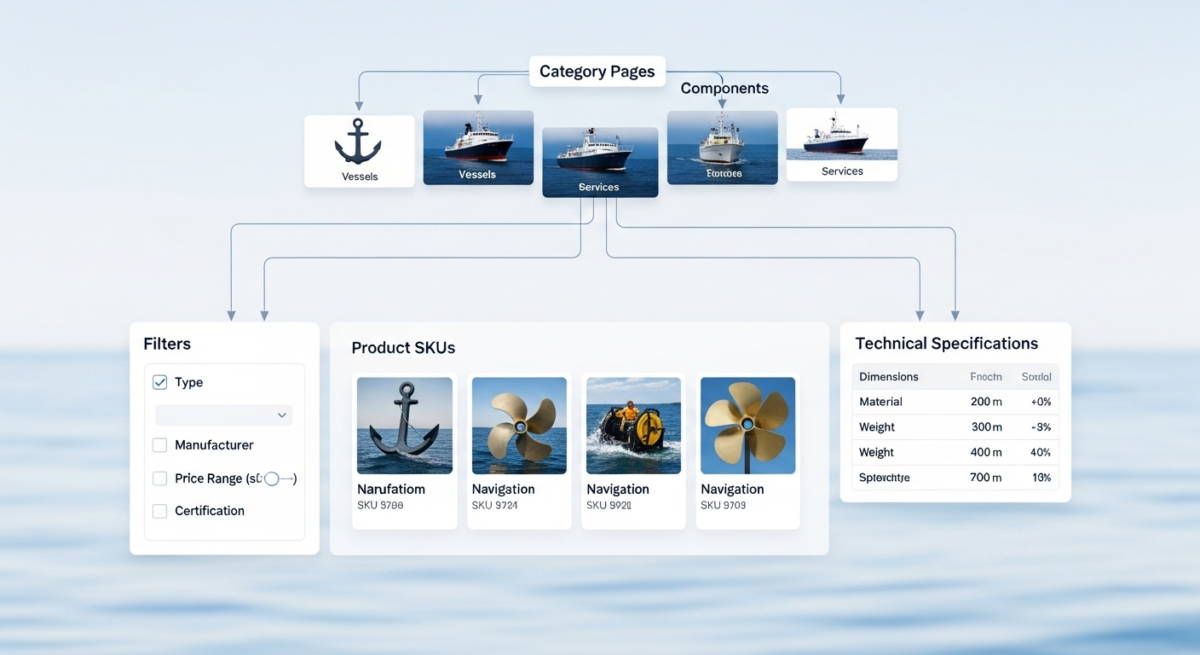
Let me be blunt. You don’t win maritime ecommerce SEO with blog posts alone.
You win with:
- Category architecture
- Filterable SKUs
- Indexable product variants
- Clear technical specs
Google prioritizes commercial clarity, especially for B2B searches.
If your e-commerce platform:
- Blocks filtered URLs
- Hides specs in PDFs
- Uses duplicate product templates
You’re invisible where it counts.
Product Page Optimization That Actually Converts Maritime Buyers
Each product page should answer five unspoken questions immediately:
- Is this compatible with my vessel or engine?
- Is it certified (IMO, SOLAS, ISO)?
- Can you deliver to my next port?
- Is this in stock or lead time-based?
- How fast can I order without emails?
Mini example
A supplier in Hamburg doubled organic orders after:
- Adding engine model compatibility tables
- Indexing variant URLs
- Displaying port delivery options above the fold
That’s ecommerce SEO with intent.
Port-Based Local SEO: The Quiet Revenue Multiplier
This part surprises people. Even global ship suppliers benefit massively from local SEO.
Why? Because vessels don’t dock globally, they dock locally.
What port-based SEO includes:
- Dedicated pages for major ports
- “Supplier near Port of X” optimization
- Google Business Profiles for physical depots
- Local delivery language
Think:
- “Ship supplier near Port of Houston”
- “Marine spare parts Rotterdam same-day delivery.”
Yes, even B2B buyers click map results. Especially under time pressure.
Maritime Ecommerce SEO and Google AI Overviews
Let’s talk about the elephant in the room. That’s not theory, it’s already happening.
Pages most likely to be cited:
- Clear definitions
- Structured FAQs
- Technical accuracy
- Trust signals (certifications, experience)
If your content explains:
“How ship suppliers deliver compliant parts across international ports.” …in a clear, neutral, expert tone, you increase your chances of being surfaced without ads.
Common Maritime Ecommerce SEO Mistakes (I See These Weekly)
Let me save you some pain.
- Relying on PDFs instead of HTML product pages
- One generic “Products” page for hundreds of SKUs
- Ignoring port-specific intent
- No schema markup (Article, Product, FAQ)
- Assuming agents replace digital visibility
The businesses that fix these don’t just rank better.
They close faster.
A Practical Maritime Ecommerce SEO Checklist
Use this as a gut-check:
⬜ SEO-friendly product URLs
⬜ Indexable variant SKUs
⬜ Engine & vessel compatibility fields
⬜ Port-based landing pages
⬜ FAQ schema on category pages
⬜ Clear delivery & compliance language
⬜ Authoritative content explaining logistics reality
If more than three boxes are unchecked, you’re leaving orders on the table.
Real Scenario: From Email RFQs to Search-Led Orders
One marine supplier I worked with had:
- Strong repeat customers
- Zero organic ecommerce traffic
After restructuring their e-commerce SEO:
- Port pages ranked within 60 days
- Emergency orders increased noticeably
- RFQs shifted from email to cart
The biggest surprise?
Procurement teams preferred ordering online once trust was established.
FAQ’s
What is maritime ecommerce SEO?
Maritime ecommerce SEO is the process of optimizing ship supplier websites to rank for product-, port-, and compliance-based searches used by maritime buyers. It focuses on SKU visibility, port delivery intent, technical specifications, and trust signals rather than general consumer-style ecommerce traffic.
Does SEO work for B2B ship suppliers?
Yes. B2B maritime buyers actively use search engines to shortlist suppliers, verify compliance, and compare delivery options. SEO often influences supplier selection before any email or RFQ is sent.
Are port pages worth creating?
Absolutely. Port-based pages capture high-intent searches tied to vessel docking schedules, emergency needs, and local availability, often converting faster than generic pages.
How long does maritime ecommerce SEO take?
Most suppliers see early visibility improvements within 60–90 days, with meaningful order impact between 4–6 months, depending on catalog size and competition.
Can SEO reduce dependency on agents?
SEO doesn’t replace agents, but it reduces over-reliance by creating inbound demand, direct orders, and stronger negotiating leverage.
What This Means for Your Business
Here’s the truth.
Maritime ecommerce SEO isn’t about chasing traffic. It’s about being findable at the exact moment a vessel needs you.
If your site:
- Explains clearly
- Delivers confidently
- Ranks consistently
Buyers will come without introductions.
Ready to Win More Orders Online?
If you want to:
- Reduce RFQ dependency
- Capture emergency and planned orders
- Compete digitally with larger suppliers
Book a free maritime ecommerce SEO strategy call. I’ll show you exactly where your site is leaking demand and how to fix it.